Macron's Pivotal Nuclear Speech: Redefining France's World Role Amidst Global Instability
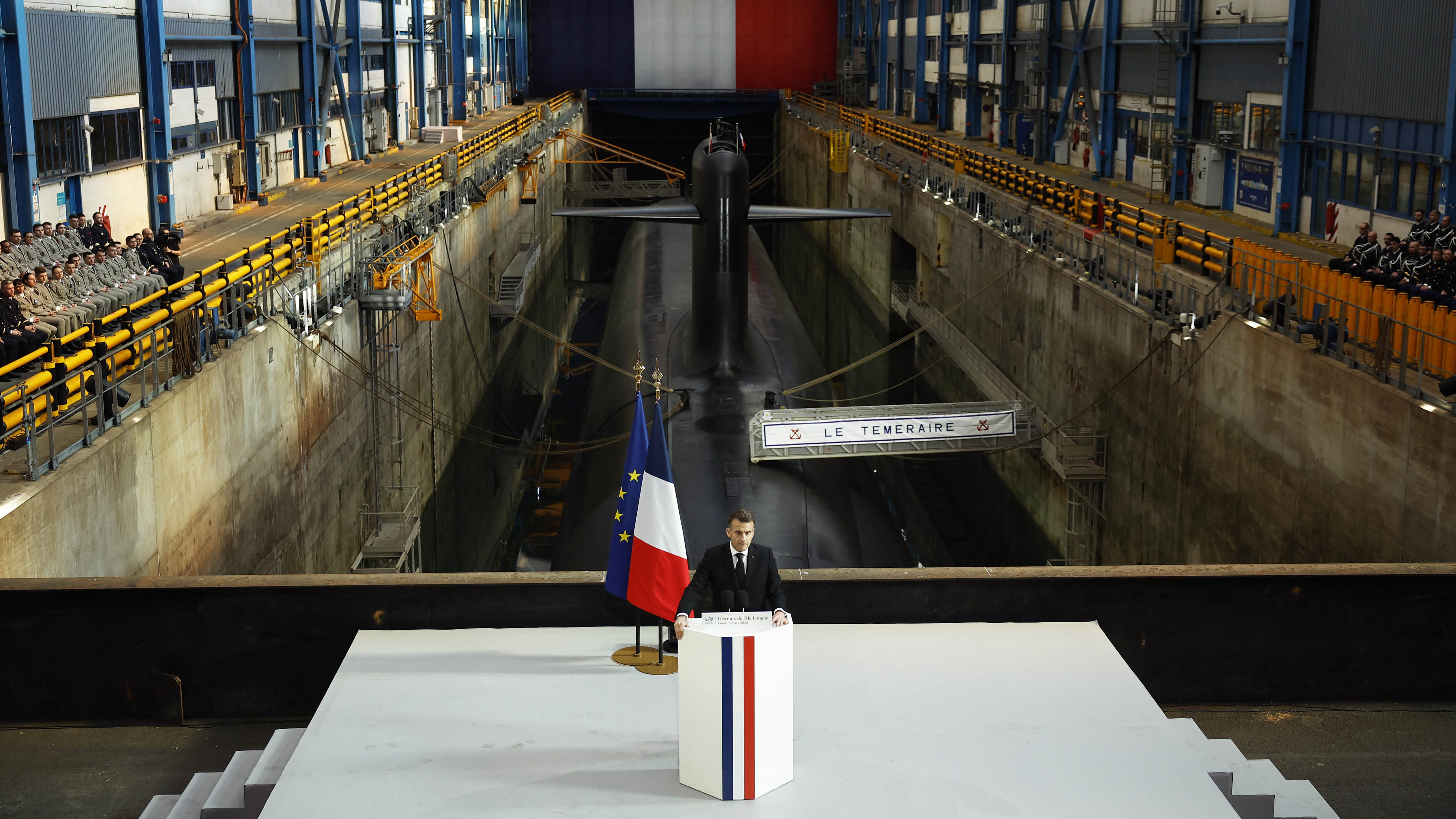
From the strategic heart of France's nuclear deterrence, the Île Longue naval base in Finistère, President Emmanuel Macron delivered a highly anticipated speech that reverberated across Europe and beyond. This crucial address, focused on France's nuclear doctrine – or
macron dissuasion nucléaire – was more than a reaffirmation of military policy; it was a powerful statement on France's evolving role in a world grappling with escalating instability and shifting geopolitical alignments. Coming at a time of profound global upheaval, notably the Middle East crisis and uncertainties surrounding traditional alliances, Macron's words aimed to clarify France's strategic posture and its commitment to European security.
The setting itself was symbolic. Île Longue, home to France's formidable nuclear ballistic missile submarines (SNLEs), represents the pinnacle of the nation's independent defense capability. It underscored the gravity of the occasion and the enduring significance of France's nuclear arsenal as the ultimate guarantor of its sovereignty. Macron's discourse was not just for a domestic audience; it was meticulously scrutinized by European partners seeking clarity on their collective security future, and by international actors observing France's determined push for greater strategic autonomy. In a world increasingly defined by what Macron termed "brutalisation," this speech laid out a vision for French leadership, anchored in a robust and credible nuclear deterrent.
Macron's Vision for France's Strategic Autonomy and European Security
President Macron's address from Île Longue was deeply rooted in a perception of a world undergoing profound strategic transformation. The "brutalisation" he referred to encompasses a spectrum of threats, from renewed great power competition and regional conflicts, exemplified by the Middle East crisis and concerns over Iran's nuclear ambitions, to the growing unpredictability of international relations. A significant dimension of this evolving landscape is the perceived uncertainty of traditional allies, particularly the United States. This context amplifies the imperative for European nations to assume greater responsibility for their own defense and security.
Macron’s speech underscored his long-standing advocacy for European strategic autonomy, where France’s nuclear capabilities play a central, yet nuanced, role. He sought to explain precisely how French nuclear deterrence, or
macron dissuasion nucléaire, can effectively contribute to reinforcing European security. This isn't about extending a blanket nuclear umbrella, but rather about France’s credible deterrent capabilities indirectly enhancing regional stability and providing a cornerstone for a more robust European defense identity. The challenge lies in translating this contribution into tangible security guarantees that resonate with European partners, without undermining France’s cherished independence of decision.
The president's vision highlights the need for a Europe capable of acting decisively in its own defense, reducing its reliance on external powers, and fostering a shared strategic culture. For France, maintaining a strong, modern, and credible nuclear deterrent is not merely a national prerogative but a crucial element in shaping a more stable and secure European future. It offers a strategic anchor in turbulent times, signaling to potential adversaries that any aggression against core European interests would entail unacceptable risks. This approach calls for deeper strategic dialogue and cooperation among European allies, fostering a collective understanding of shared threats and the role of deterrence in mitigating them. To understand the intricacies of this doctrine, delve into
Macron's Nuclear Doctrine: Securing Europe Amid Global Instability.
The Pillars of French Nuclear Deterrence (Dissuasion Nucléaire Française)
France's nuclear deterrence doctrine is built upon two complementary components, meticulously maintained and constantly modernized to ensure their credibility and effectiveness. These dual capabilities guarantee France's ability to inflict unacceptable damage on any aggressor, thus preventing hostile action.
Firstly, the **oceanic component** is epitomized by the four nuclear ballistic missile submarines (SNLEs) based at Île Longue. These state-of-the-art vessels are designed for extreme stealth and endurance, making them virtually undetectable once submerged. The doctrine mandates that at least one, and often three, of these submarines are on continuous patrol, ensuring a permanent and invulnerable second-strike capability. This sea-based force, equipped with advanced M51 strategic ballistic missiles, represents the ultimate guarantor of France's deterrence, capable of operating globally and delivering devastating retaliatory strikes. The successful, albeit unarmed, test-firing of an M51 missile from a submarine in Audierne Bay, just hours before Macron's speech, served as a potent demonstration of this component's operational readiness and technical prowess.
Secondly, the **airborne component** provides flexibility and adaptability to France's deterrence posture. This involves advanced Rafale fighter jets, capable of carrying the Air-Sol Moyenne Portée Amélioré (ASMPA) missile. This aerial capability offers a visible and rapid response option, complementing the long-term, stealth capabilities of the submarines. The airborne component ensures that deterrence is not solely reliant on one platform type, diversifying the options available to the President as the supreme commander of France's armed forces. The ongoing renovation and modernization efforts across both components are critical to ensuring their continued relevance and technological superiority in a rapidly evolving threat landscape. For a deeper look into these efforts, explore
France's Nuclear Modernization: Macron's Strategy for Deterrence.
Maintaining such a sophisticated and credible deterrence system requires continuous investment, technological innovation, and rigorous training. The seamless integration and command structure of these components, directly under the President's authority, are what render France's
macron dissuasion nucléaire a potent and reliable instrument of national security.
Boosting Defense Amidst Geopolitical Volatility: The Economic Imperative
A cornerstone of Macron's strategy to bolster France's global standing and reinforce its nuclear deterrent is a robust commitment to defense spending. The speech highlighted a significant and sustained increase in the defense budget, reaching an impressive 37.2 billion euros in 2020, representing a substantial increase of 1.7 billion euros in that year alone. President Macron has explicitly stated his intention to continue this upward trajectory in the coming years, signaling a long-term strategic investment in national security.
This substantial financial commitment is not merely about increasing military might; it's a strategic imperative to ensure the continuous modernization and renovation of both the oceanic and airborne components of France's nuclear deterrence. The M51 missiles, the Rafale jets, and the SNLE submarines are all products of advanced engineering and require ongoing upgrades to maintain their technological edge against potential adversaries. This investment secures the future of France's
macron dissuasion nucléaire, ensuring its credibility remains unassailable.
Beyond direct military hardware, this increased budget fuels France's defense industrial base, supporting high-tech manufacturing, research, and development. This, in turn, fosters innovation, creates skilled jobs, and strengthens France's technological sovereignty, which are all vital elements of strategic autonomy. The economic impact of such defense spending is significant, creating a virtuous cycle where investment in security also contributes to economic growth and technological leadership. It reflects a national understanding that in a volatile world, robust defense capabilities are not a luxury but a fundamental necessity for peace and stability.
France's Role in Global Stability and Arms Control
President Macron's speech transcended the mere exposition of France's nuclear doctrine; it positioned French deterrence within a broader framework of global stability and responsible international engagement. He addressed the perennial challenges of nuclear disarmament and non-proliferation, reaffirming France's steadfast commitment to these objectives while emphasizing that disarmament must be reciprocal, verifiable, and universal. France, as one of the five permanent members of the UN Security Council and a nuclear-weapon state, plays a critical role in advocating for arms control and upholding the international non-proliferation treaty (NPT).
Macron articulated a strong line on France's action for arms control, stressing the need for dialogue and multilateral solutions even in an era of heightened tensions. He underscored France's unique position as a credible nuclear power that has consistently advocated for a more responsible approach to nuclear weapons globally. This dual approach of maintaining a strong deterrent while championing arms control reflects France's pragmatic understanding that security in the 21st century requires both robust defense capabilities and active diplomatic engagement.
Ultimately,
macron dissuasion nucléaire is not just about protecting France; it's about projecting an image of stability and responsibility onto the international stage. By defining its doctrine and outlining its strategic vision from a position of strength, France seeks to influence global debates, encourage de-escalation, and promote adherence to international law. This integrated approach, combining deterrence with diplomacy, underscores France’s ambition to be a leading voice for a more secure and predictable world order.
Conclusion: A New Era for French Deterrence and Global Influence
Emmanuel Macron's pivotal nuclear speech from Île Longue unequivocally outlined France's unwavering commitment to its strategic independence and its pivotal role in the future of European security. Amidst a "brutalised" world grappling with geopolitical upheaval, the doctrine of
macron dissuasion nucléaire stands as a testament to France's resolve to safeguard its interests and contribute to broader stability. Through continuous modernization, a robust defense budget, and a steadfast commitment to arms control, France is redefining its influence on the international stage. This comprehensive approach, balancing strength with diplomacy, not only ensures the credibility of its nuclear deterrent but also underscores its enduring vision for a sovereign Europe capable of navigating the complexities of the 21st century. As global uncertainties persist, France's assertive stance and its formidable deterrent will undoubtedly remain a crucial factor in shaping the strategic landscape for years to come.